A Patio Practice for a Mild Morning
A patio practice for a mild morning can make outdoor movement feel calm and manageable: choose shade, clear a small patch and follow a gentle standing sequence.
The common mistake with a patio practice for a mild morning is starting wherever the door opens, before checking the sun, ground or space. A patch that feels comfortable at first can become glaring or crowded once you begin moving, and then the session turns into a search for somewhere better. A little attention to the setting lets you keep the practice simple and equipment-free.
Choose the patch
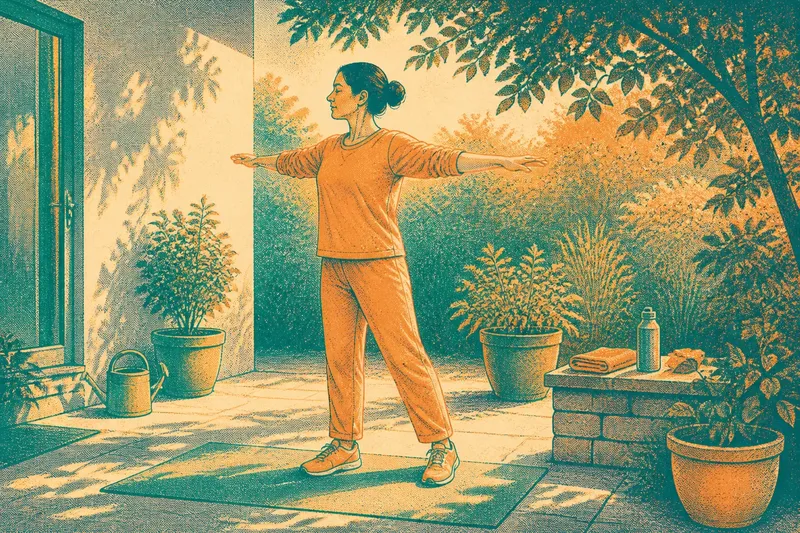
Look for a clear area where you can stand with your arms extended without reaching a wall, chair or planter. You do not need a large patio: a modest open patch is enough for movements that stay upright and close to the body. Move pots, watering cans and loose garden tools out of the way rather than weaving around them.
Check the ground with ordinary attention. Notice whether it is damp, gritty, uneven or scattered with fallen leaves, and choose a different spot if your footing feels uncertain. If the patio is shared with a pet or other household members, allow room for them to pass without cutting through your movement space.
Shade often makes the session easier to settle into, particularly if direct sun falls across the patio. A wall, roof edge or leafy tree may offer a comfortable patch, but consider how the shade will shift during your practice. If the only suitable ground is exposed, keep the session brief and move indoors if you feel uncomfortably hot or light-headed.
Settle into the weather
Mild weather still varies from one corner of a home to another. A sheltered patio can feel warmer than the garden, while a breeze between buildings may make a quiet standing sequence feel chilly. Before starting, step outside for a moment and notice whether you would be comfortable staying there without rushing.
Wear clothes that let your shoulders, hips and knees move freely, along with footwear that feels secure on the surface. Bare feet are not automatically the best choice: the ground may be cold, rough or less clean than it looks. Keep water within reach if that suits you, but leave bottles and other objects outside the space where your feet will move.
Decide in advance what would make you change plans. A sudden shower, gusty wind, a surface that has become slippery or discomfort that grows as you move are all good reasons to pause or take the practice indoors. For a health concern or movement that causes pain, seek advice from a qualified professional rather than pushing through.
Use a gentle sequence
Think of the sequence as a gradual tour of standing movement, not a test of flexibility. Move at a pace that leaves you able to breathe comfortably, and keep each motion within a range that feels steady. You can make the whole session shorter by doing fewer repetitions or leaving out a movement.
- Arrive. Stand with your feet in a comfortable position and let your arms rest by your sides. Notice the ground beneath you and take a few unforced breaths.
- Shift your weight. Move gently from one foot towards the other without lifting either foot. Return to the middle between shifts, and keep the motion small enough to feel balanced.
- Reach and lower. Lift your arms forwards or out to the sides only as far as comfortable, then lower them slowly. Let your shoulders stay relaxed rather than pulling them up towards your ears.
- Turn softly. With your feet planted, rotate your upper body a little to one side, return to the centre and repeat on the other. Keep the movement easy and avoid forcing the turn.
- Step and return. Take a small step forwards or to the side, then bring your feet back to a comfortable stance. Alternate sides if the ground is clear and the steps feel secure.
- Finish quietly. Stand still, let your arms rest and notice how you feel before heading back indoors. If you feel unsteady or uncomfortable, stop and sit somewhere safe.
There is no need to make every motion symmetrical or exact. If one side feels less comfortable, use a smaller range there and keep your weight centred. The aim is an easy, attentive session that suits the available space, not a sequence that must be completed unchanged.
What should you adjust?
How long should a patio practice last?
Choose a duration that fits the morning you have, rather than treating a particular length as a requirement. A few movements done calmly can be enough to give the session shape; stop sooner if the weather, footing or your comfort changes.
Can I practise on a cool morning?
Yes, if you can move comfortably and the ground feels secure. Wear a layer you can move in, start with small motions and head inside if you remain cold or your body feels stiff in a way that makes movement uncomfortable.
What if the patio is very small?
Keep both feet in place and choose motions such as gentle weight shifts, arm reaches and small upper-body turns. Skip steps if you cannot move without nearing furniture, walls or objects on the ground.
Should I use a chair for balance?
If you need support, use a stable chair positioned so it cannot slip or obstruct your movement, and hold it only in a way that feels secure. If balance is a concern beyond this simple adjustment, ask a qualified professional what kind of activity is appropriate for you.
Keep the setup simple
It is not worth moving heavy furniture, buying outdoor exercise gear or trying to create a picture-perfect corner for a short standing practice. The useful decisions are smaller: whether the ground is clear, whether the shade is comfortable and whether you have room to move without bumping into anything.
Say you step onto a patio where the sunny area is bright and a narrow patch beside the house is shaded. You clear a watering can from that patch, check that the surface is dry, then use weight shifts, easy reaches and small turns; the observable result is a session you can complete without changing location or dodging objects.
Once you have a spot that works, leave yourself a simple reminder of what to check next time: shade, clear ground and enough room for your chosen motions. A patio practice for a mild morning does not need a special routine or an ideal forecast; it needs a setting that lets you pay attention to how each movement feels.