The Stretching More Is Always Better Myth
Stretching more is not always better: learn how comfort, attention and personal preference can make a home mobility session feel more useful.
The common mistake with stretching is treating a longer hold as an automatic improvement; it can cost you comfort, attention and the pleasure of moving. Stretching more is not always better, and a useful home session can be brief when you choose a position you can breathe in and pay attention to.
That does not mean duration is irrelevant or that every stretch should be short. It means the clock is only one part of the experience. How a position feels, whether you can stay relaxed and what you want from the session matter just as much.
What does a stretch do?
A stretch places a body area in a position that creates a sensation of length or tension. That sensation varies from person to person and from one day to the next; it is not a score that tells you how hard you are working.
For a home practice, stretching can be a way to explore a comfortable range of movement, pause between tasks or attend to an area that feels stiff after sitting. It is not a requirement to reach a particular shape, touch the floor or imitate someone else’s posture.
It also helps to distinguish a stretching session from a mobility session. Stretching commonly involves holding a position, while mobility work can include moving through a range with control. Either may suit your aim; neither needs to become a contest in endurance.
Does holding longer help?
Not automatically. A longer hold may give you more time to settle into a position, but the extra time is useful only if you remain comfortable enough to notice what is happening and adjust when needed.
If the sensation builds until you brace, hold your breath or fixate on escaping the position, staying longer may make the session feel less worthwhile. You can ease out, change the angle or choose a gentler version rather than treating discomfort as proof that the stretch is working.
On another day, a longer, calm hold might suit you. The point is not to avoid duration, but to let your attention and comfort guide it instead of assuming that more time must produce a better result.
How much tension is enough?
Look for a mild, manageable sensation of tension that lets you breathe naturally. You should be able to keep your face and shoulders relatively relaxed and shift your attention without needing to endure a sharp or alarming feeling.
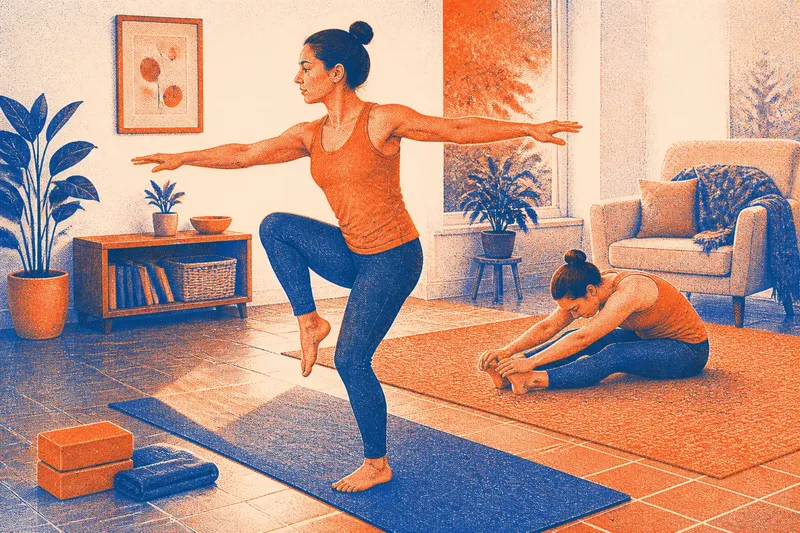
For example, when seated with one leg comfortably extended, you might hinge forward only until the back of that leg feels lightly drawn. You do not need to pull on your foot or force your chest towards your knee; you can sit taller if the sensation becomes too strong.
Different people experience the same position differently, and the same person may find it changes with mood, fatigue or the shape of the movement. Use your own present-day response rather than a picture, a classmate’s range or a supposed ideal.
Should I stretch through discomfort?
Ordinary, mild tension is different from pain. Stop or change the position if you feel sharp pain, tingling, numbness, a sudden pulling sensation or anything that makes you feel unsafe; do not try to push through to prove your commitment.
You can make a position easier by bending a joint slightly, using a cushion or folded blanket for support, or reducing how far you move. For instance, a standing side reach can become gentler when you keep both feet grounded and let the reaching arm travel only as far as feels easy to control.
These are general comfort cues, not a way to diagnose a problem. If pain is persistent, severe or linked to an injury or health condition, ask a qualified health professional for guidance suited to you.
How often should I stretch?
There is no single schedule that suits every household or body. Some people enjoy a few stretches as a break from a desk; others prefer to include them in a longer movement practice or to do them only when they feel like it.
Think about whether the session fits your day and leaves you feeling settled enough to return to what you were doing. If you find yourself avoiding stretching because it has become a long obligation, a shorter visit to one or two positions may be a more appealing choice.
Consistency does not have to mean following a strict daily rule. A practice that fits your preferences is easier to return to than one built around an arbitrary duration.
Which stretch should I choose?
Choose a position that relates to what you want to explore and can be done comfortably in your available space. If you have been sitting, you might try a gentle standing reach or an easy seated change of position; if you want a quiet pause, a supported floor position may feel more suitable.
Consider the room as well as the stretch. A clear patch beside a sofa, a stable chair for support and a cushion within reach can make it easier to adjust without turning the session into a search for perfect equipment. You do not need a specialised strap or an elaborate sequence to make a considered choice.
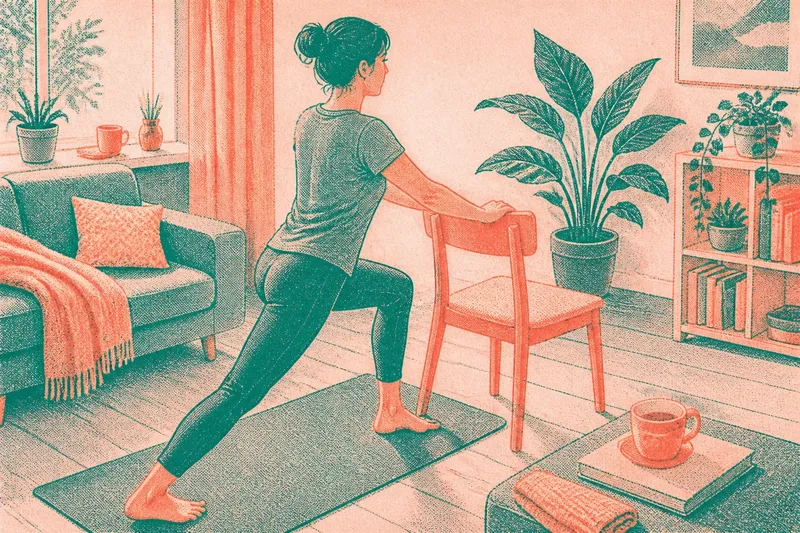
Say you have a few quiet minutes between making tea and answering an email, and your hips feel stiff after sitting. You might stand beside a chair, place a hand on its back and gently shift your weight until you notice mild tension at the front of one hip; if you can breathe comfortably, you stay briefly, then switch sides or stop when ready. The observable result you are aiming for is simply a position that feels manageable and attentive, not a particular range or a promised change.
Do I need a routine?
A routine can remove the friction of deciding what to do, but it should not dictate how your body must feel. A small menu of familiar options may be more useful than a fixed sequence that you feel obliged to complete, especially on days when your energy or available space differs.
You could keep a note with a few choices such as a supported standing reach, a gentle seated twist and an easy calf stretch at the wall. Pick one that feels appropriate, adjust it, and leave the others for another time. The note is there to prompt you, not to turn stretching into a test of completion.
What is not worth the effort is chasing a dramatic pose just because it looks impressive or buying equipment to force yourself deeper. If a prop helps you feel supported, use it; if it adds fuss without making the position more comfortable, leave it aside.
Questions about stretching?
Can I stretch every day?
You can include gentle stretching frequently if it feels comfortable and fits your needs, but daily practice is not a requirement. Pay attention to how each position feels that day and take a break or choose another movement when it does not feel right.
Is it better to stretch in the morning or evening?
Neither time is automatically best; choose the part of the day when you can settle into the movement without rushing. A brief stretch beside the bed may suit one person, while another may prefer a quiet pause before sitting down for the evening.
Should I stretch both sides equally?
Exploring both sides can help you notice how each position feels, but forcing equal depth or identical sensations is unnecessary. Make the same kind of comfortable adjustment on each side, and let your range differ if that is what feels manageable.
Can I use a chair or cushion?
Yes, a stable chair or cushion can make a position feel more supported and easier to adjust. Keep the chair secure and use the prop to reduce effort, not to push farther into a stretch.
What should guide a session?
Let comfort, attention and preference shape the session more than a timer or an idealised pose. Notice whether you can breathe, stay present and choose to continue; if not, alter the position or finish.
Stretching more is not always better, but stretching with a little more awareness can make the time you choose feel more useful. Give yourself permission to stop while a position still feels manageable, and let that be enough for today.