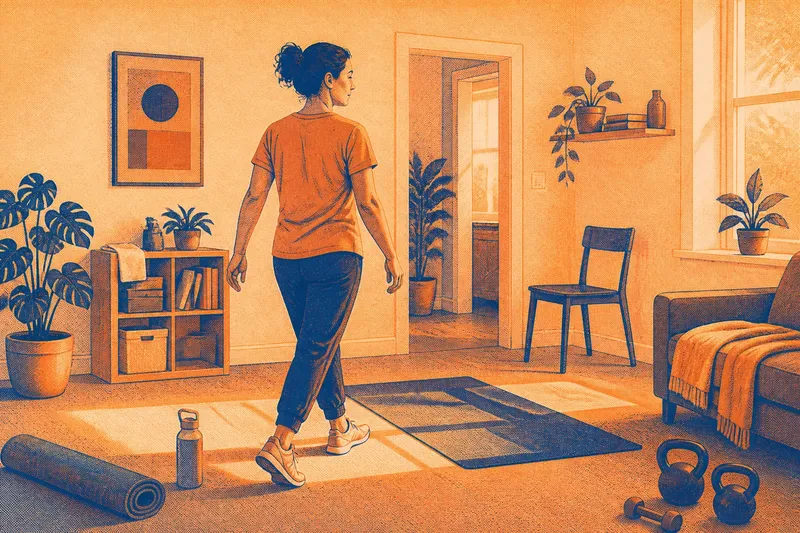
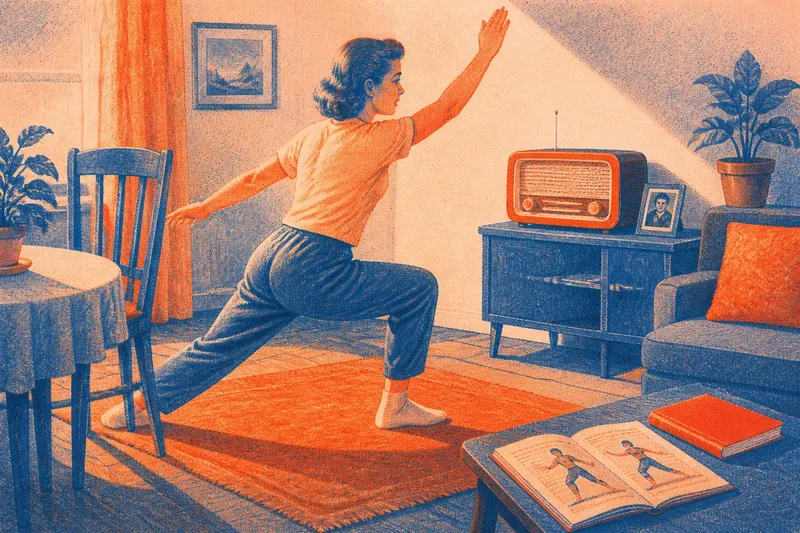
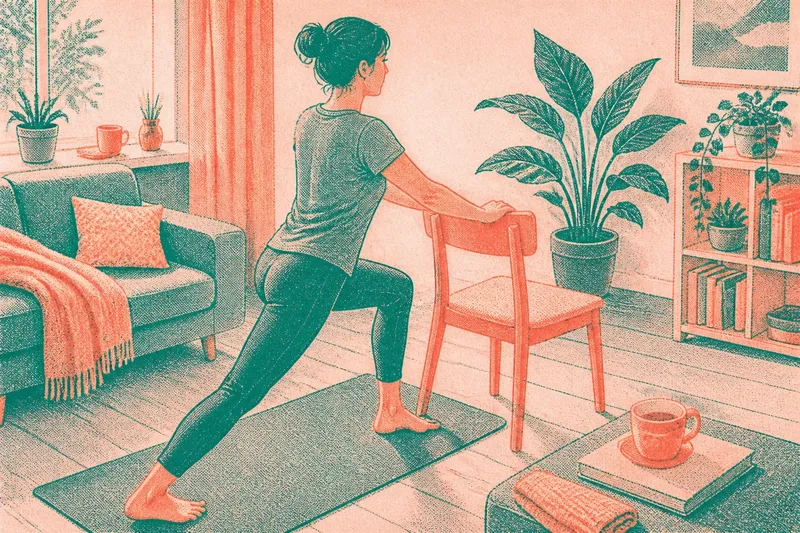
Mat, Rug or Bare Floor: Choosing a Surface for a Home Practice
Choose a surface for a home practice by matching grip, cushioning and available space to your movements, so the floor feels comfortable without getting in the way.
The common mistake with a home practice surface is choosing the softest option and assuming comfort will follow; too much give can make balance awkward, while a slippery patch can interrupt a movement. A mat, rug or bare floor each feels different underfoot, so the useful choice depends on what you plan to do, how much room you have and whether the surface stays put.
Start with movement
Think about the contact your practice asks of the floor. Standing balance, seated mobility, kneeling and movements that travel across the room put different demands on a surface, even if they happen in the same session.
For standing work, look for predictable grip beneath your feet and enough space to shift without catching an edge. For floor-based work, consider whether your knees, hips or hands need a little cushioning. A surface that helps one movement can hinder another: a plush rug may feel kind to the knees but make a steady standing pose feel less certain.
Also notice how often you change position. If you move from standing to lying down and back again, a surface that stays flat and does not bunch may be more useful than one chosen only for softness.
When a mat fits
A fitness or yoga mat gives you a defined practice area and a layer between your body and the floor. It can be especially handy on a hard surface for seated work, kneeling or floor movements, and it is easy to roll away when the room has another purpose.
Mat materials differ in texture, firmness and grip. Some have a more cushioned feel; others are thinner and firmer. A grippy surface can help your hands and feet stay where you place them, but a tacky texture may make it harder to pivot or slide smoothly. Try to match the feel to the movements you actually do rather than choosing by appearance alone.
A mat is less appealing if its edges curl, it shifts on the floor or it is too narrow for the movements you want to practise. If your session includes broad arm sweeps or lying with limbs extended, check that your body can stay on the mat without repeatedly adjusting position.
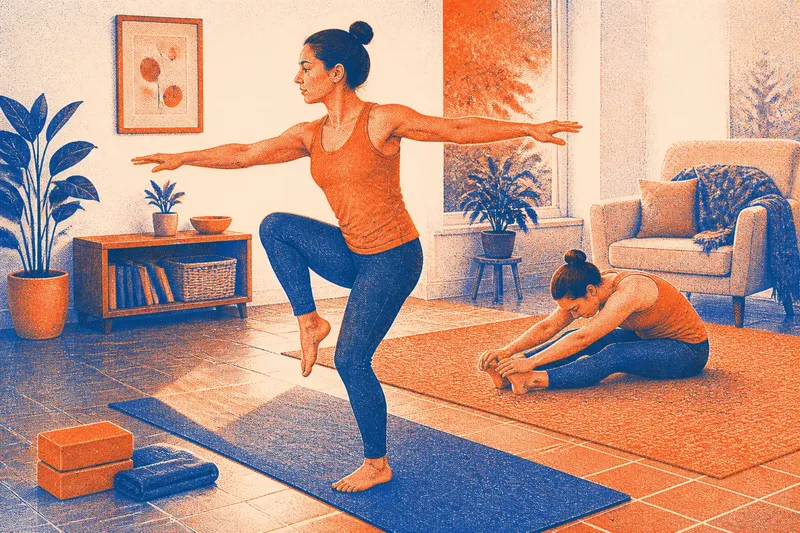
Say you have a small tiled area and your practice alternates between seated mobility and standing balance. A firm mat could provide a comfortable patch for the seated portion, while standing on the surrounding tile may feel more stable. The observable aim is a clear transition between surfaces without the mat sliding or becoming a trip point; if it does, keep the practice on one consistent area instead.
When a rug works
A rug can make an existing room feel more welcoming without requiring a separate piece of workout equipment. A low-pile rug with a stable backing may suit gentle floor-based movement, especially if you already have a clear patch that is large enough for your practice.
Its main drawback is inconsistency. Thick pile compresses under pressure, while a loose or folded edge can catch a foot. A rug may also move on a smooth floor, so check whether it stays in place during ordinary weight shifts. Avoid treating softness as a substitute for a secure surface.
Rugs are often best for slower routines that stay mostly in one spot. They may be a poor match for quick footwork, frequent pivots or movements that ask you to slide your hands or feet. If the pile makes a position feel unstable, use a firmer surface for that movement rather than trying to brace against the rug.
When bare floor suits
Bare floor offers a firm, uninterrupted surface, which can be useful for standing movements, balance practice and routines that travel across the room. It also removes the need to store or reposition a mat, and it makes the usable area easy to see.
The trade-off is direct contact. Hard flooring can feel uncomfortable under knees, elbows or the spine during floor-based movements. If that discomfort changes how you move, consider a mat for those portions or adapt the practice to keep more movements standing or seated.
Floor material matters, too. Wood, laminate, tile and carpet do not offer the same feel or grip. Dust, polish, dampness and loose objects can also affect footing, so notice the condition of the area before starting. Where footwear is involved, use what suits the movement and the floor, rather than assuming bare feet are always the better option.
Match surface to practice
These options are not a ranking. They are different ways to manage grip, cushioning and room layout, and the right answer can change between parts of a routine.
- Mostly standing balance: favour a firm, steady area, such as bare floor or a firm mat that does not shift.
- Kneeling or seated floor work: consider a mat or a stable, low-pile rug for extra comfort.
- Frequent pivots or travelling steps: choose a clear surface that allows the movement without catching on an edge or sinking into pile.
- Limited storage: bare floor or an existing rug may be simpler than adding another item to put away.
- Mixed floor and standing movements: consider whether a mat can stay flat and secure, or whether one consistent surface would make transitions easier.
Before settling on an option, clear the area and try a few representative movements at an easy pace. Notice whether your hands and feet stay where intended, whether your joints feel comfortable, and whether you can change position without fuss. Stop or modify a movement if the surface makes you feel unsteady or causes discomfort.
Surface questions?
Is a yoga mat suitable for every workout?
No single mat suits every movement. A grippy, cushioned mat can feel comfortable for some floor work, while a firmer surface may be better for balance or pivoting; choose according to the practice and how the mat behaves beneath you.
Can I exercise on carpet?
Carpet can work for slower movements if it is stable and its pile does not make you feel wobbly. Deep or loose pile may be awkward for standing balance, quick steps or movements that need a consistent contact point.
Should I use a mat on a rug?
That depends on whether the rug holds still and whether the combination feels stable. If the mat slides or bunches on top of it, use a different surface rather than adding layers that make footing less predictable.
What if my knees hurt on the floor?
Try a more cushioned surface or alter the movement so it puts less pressure on your knees. If pain persists, worsens or limits everyday movement, ask a qualified health professional for individual advice.
Keep it uncomplicated
It is not worth buying several mats or rearranging an entire room before you know what your practice needs. Start with the available surface, pay attention to grip and comfort, and add a mat only if it solves a specific problem.
For choosing a surface for a home practice, the clearest decision is the one you can make from the movements themselves: where you need steadiness, where cushioning helps and whether the space stays clear. Check the mat maker’s care and use instructions, and follow any relevant floor or product guidance. A simple, secure patch of floor is often enough to begin.